March 18, 2026
A Buddhist Temple Rises in the
Bay Area: Part III
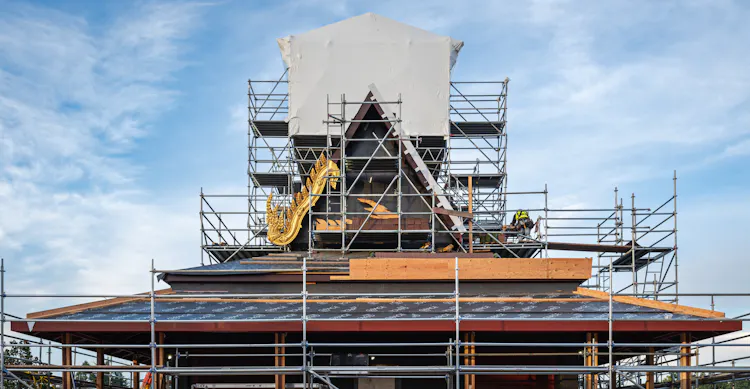
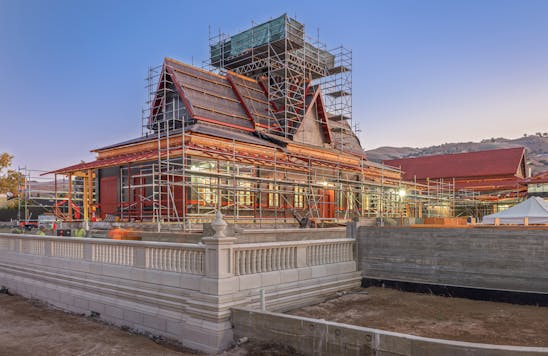
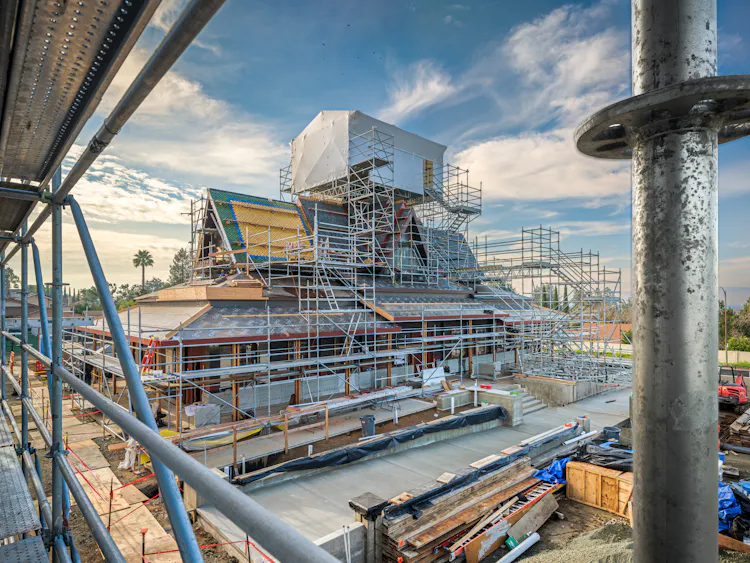
The project at Wat Khmer Kampuchea Krom continues to advance across all fronts. Ornamental roof components are starting to be painted, decorative wall base elements are being installed, and patterned roof tile is beginning to give the main sanctuary its distinct character. These first finish layers signal a significant shift in the work.
This is the third installment in an ongoing documentation series created in collaboration with Andrew Mann Architecture and A Khmer Buddhist Foundation.
Ornament in Color
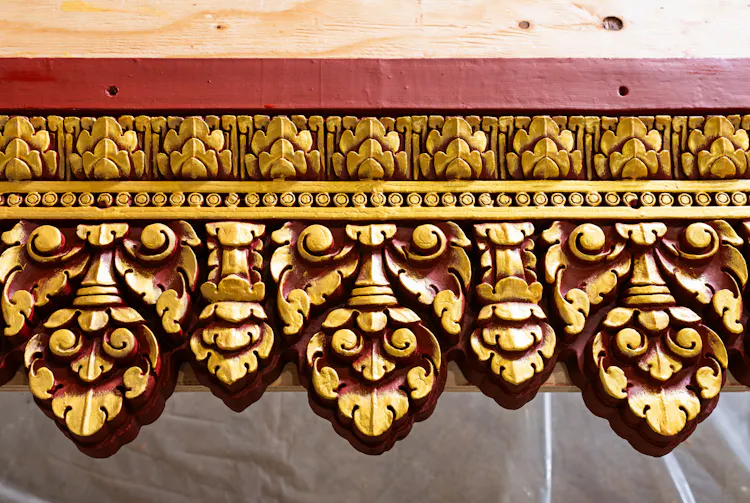
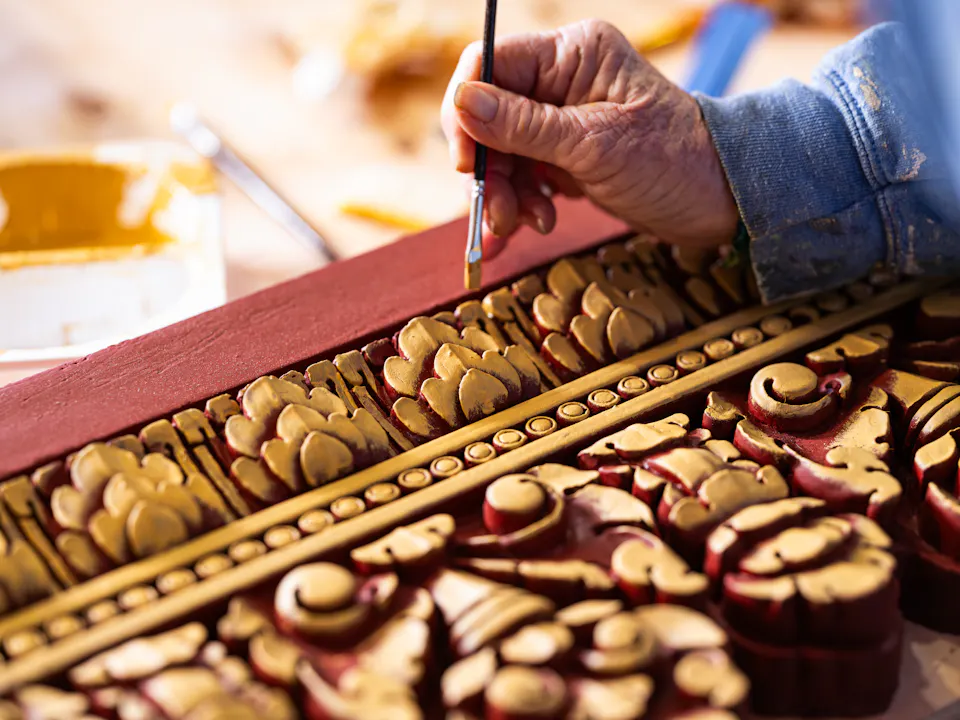
The team has set aside space to finish ornamental roof-edge components before installation. Fascia elements are laid out so painters can work efficiently and maintain consistency across all pieces.
This work reflects an ongoing process of learning and adaptation. Specialty decorative painting consultants have been studying Khmer precedents and helping translate the approach into a process the site team can carry out with precision and care.
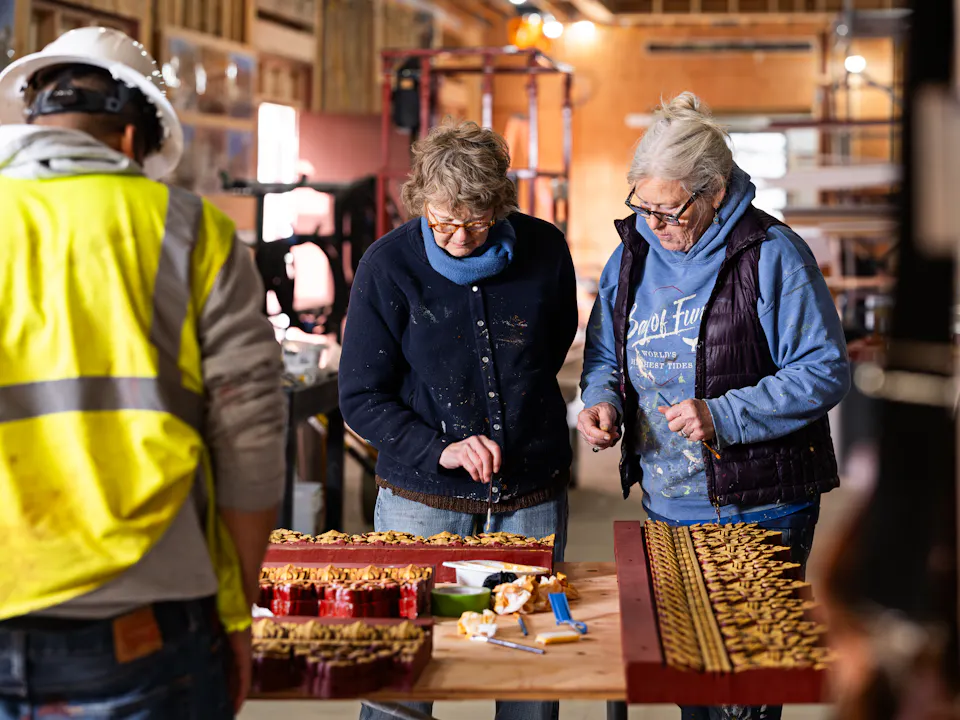
The process begins with a red base coat that establishes the field color. Gold accents are then built up in layers, moving from an initial pass to a brighter metallic finish. Rather than covering the entire piece in gold, the painters leave areas of red exposed. That contrast helps the carved forms read clearly from the ground.
The team is beginning with a limited group of pieces to refine technique before expanding to the full set.
Kbach Rachana
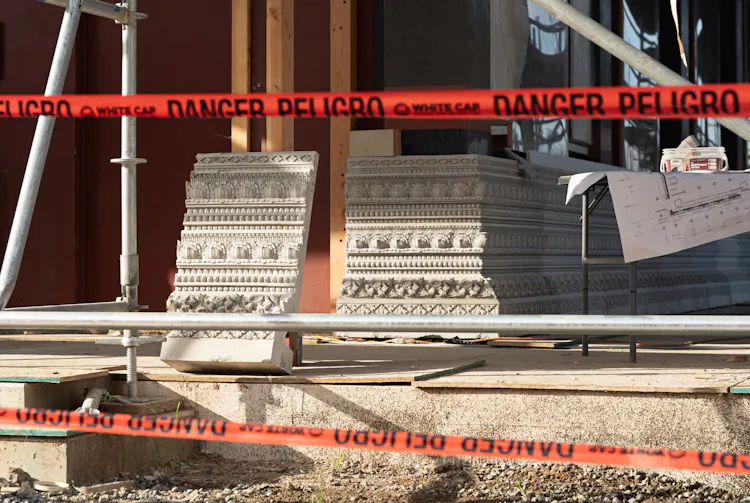
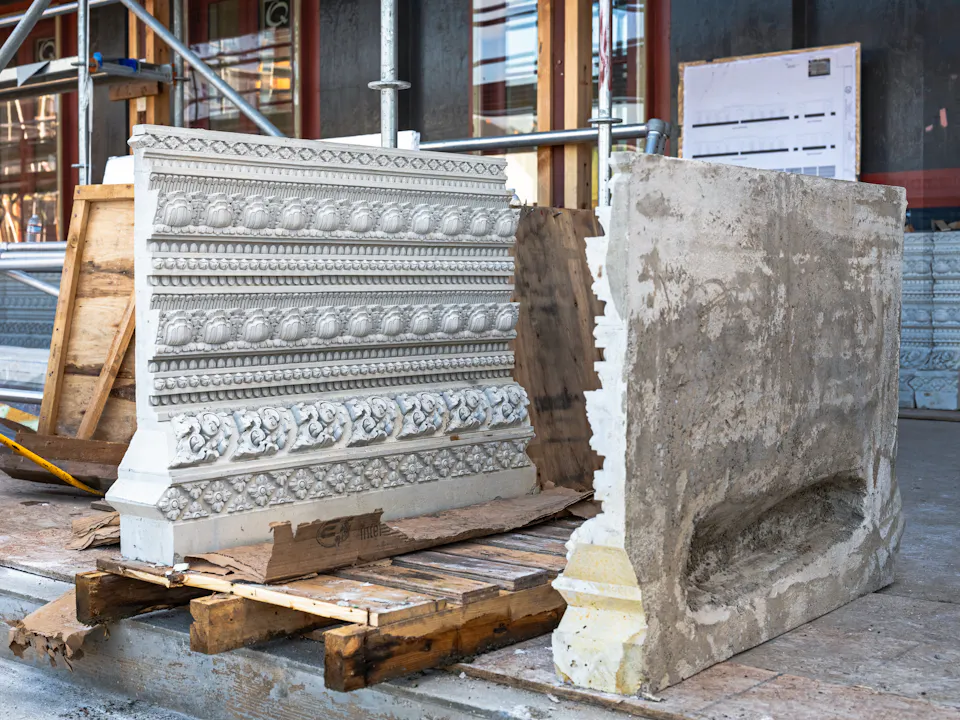
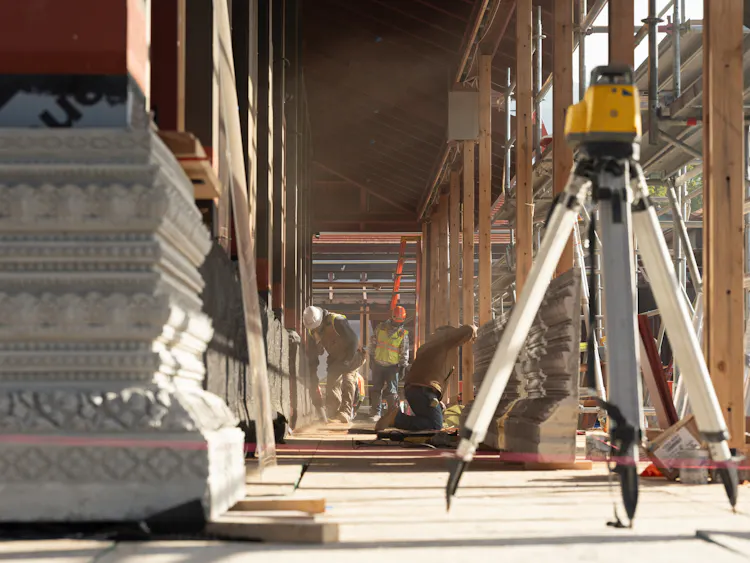
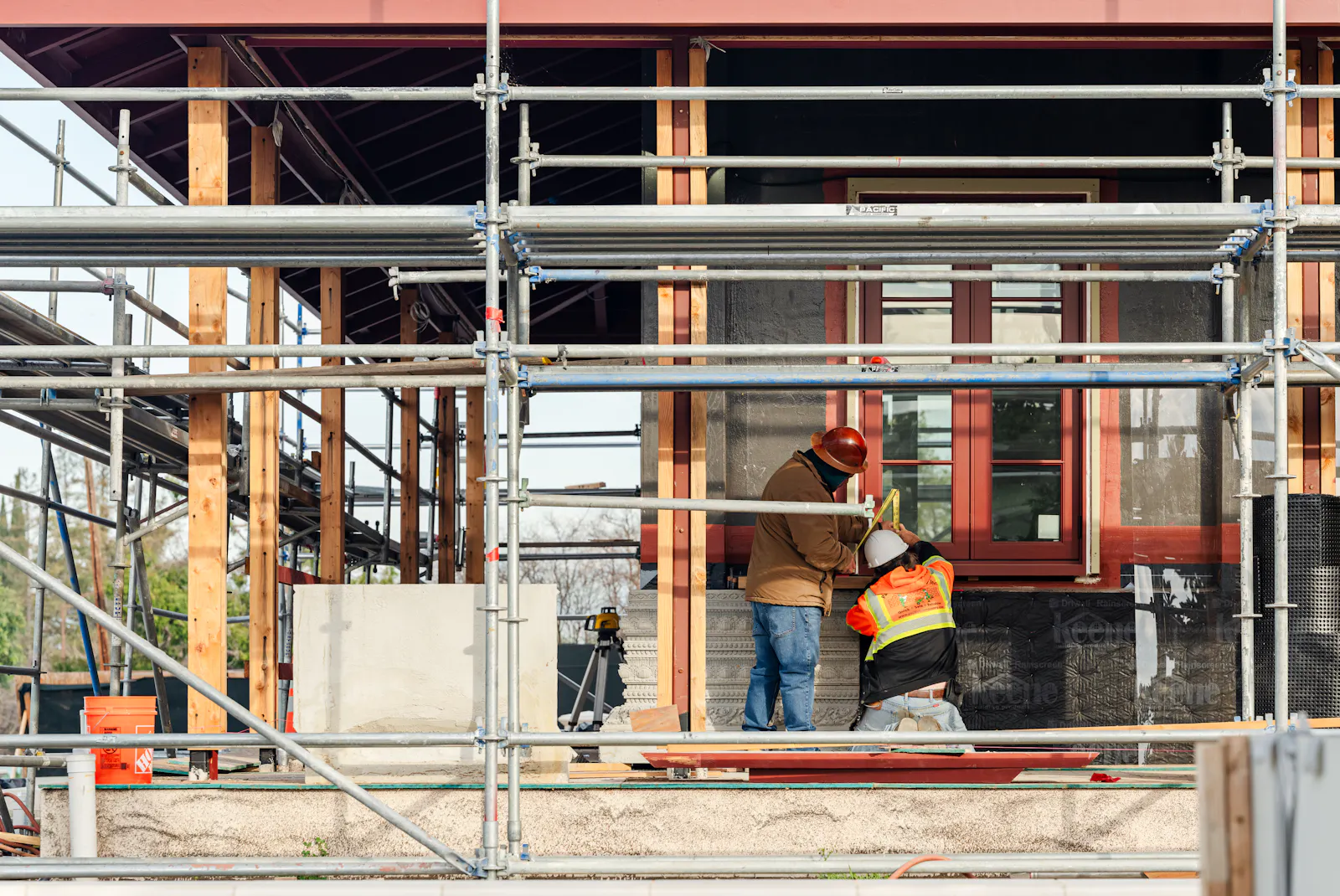
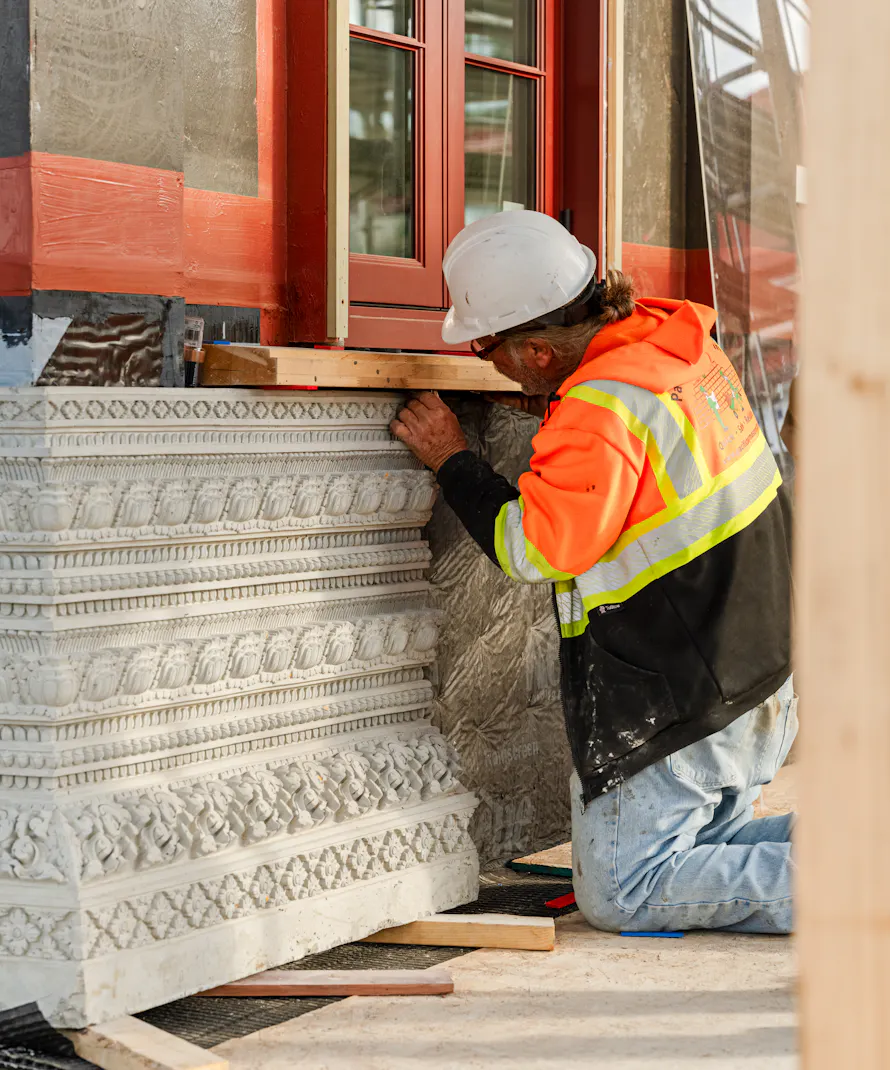
Along the exterior walls of the main sanctuary, decorative wall base elements are now being installed. These pieces sit at the base of the wall and begin to define the perimeter of the building.
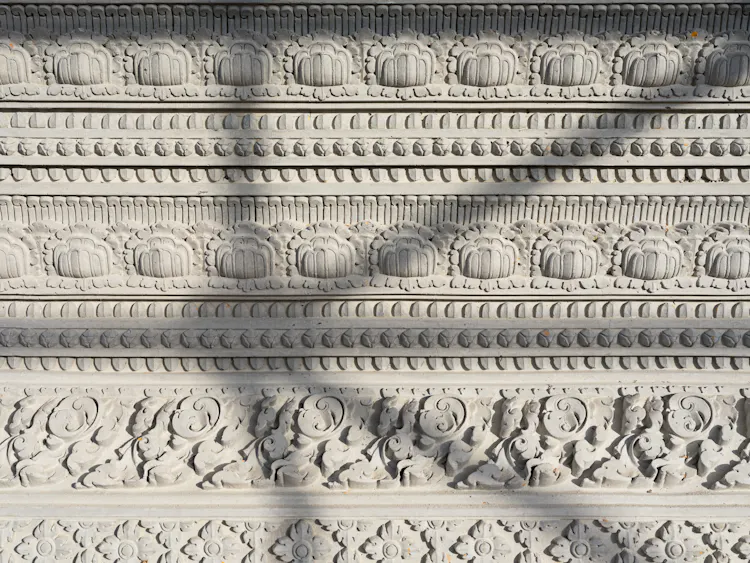
The wall base is adorned with kbach rachana, the classical ornamental language of Khmer architecture. These particular motifs draw inspiration from Banteay Srei, the tenth-century temple celebrated for the precision and refinement of its carvings. Often described as the jewel of Khmer art, Banteay Srei is known for its intimate scale, intricate ornament, and is one of the most admired expressions of Khmer artistry.
These components were produced in Cambodia and shipped to San Jose for installation. Their arrival is one of the clearest expressions of the cultural exchange shaping the project.
The Sanctuary Roof
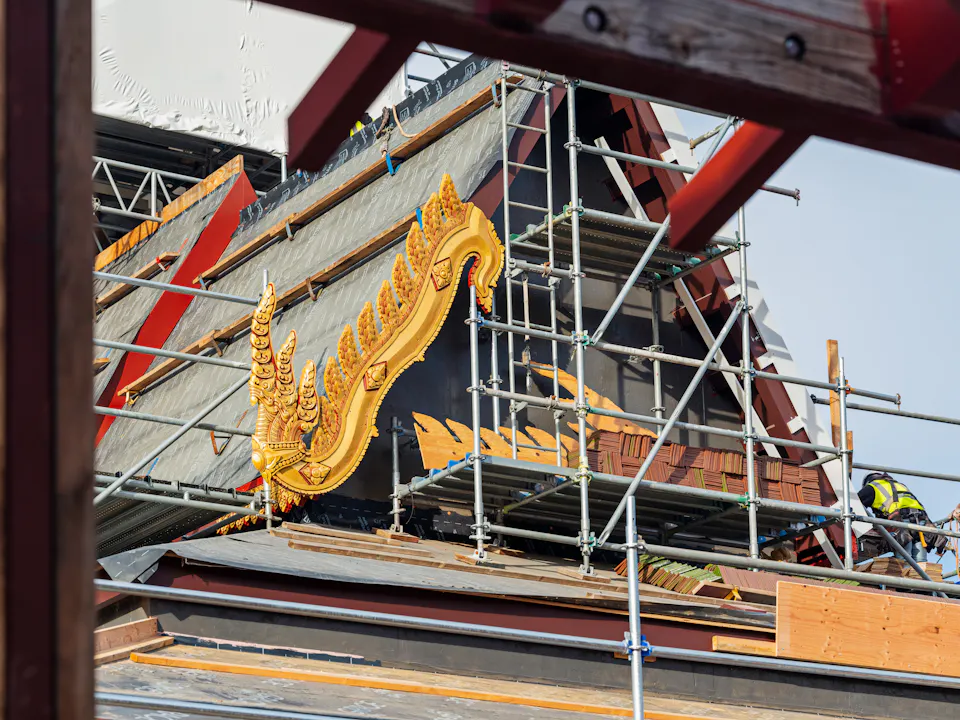
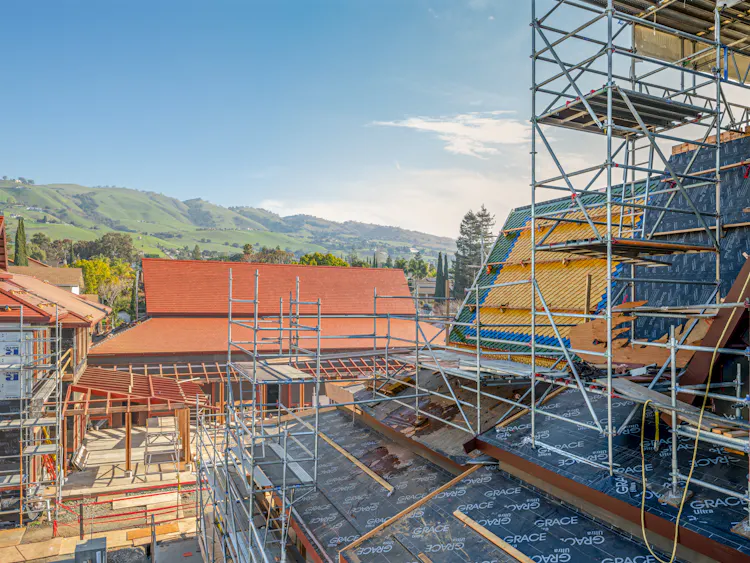
Roofing has been underway across the campus for several months. With the community building roof largely complete, attention has shifted to the main sanctuary. Khmer roof forms are typically steep and heavily tiled. They carry much of a building’s visual identity. In California, this kind of expression is rare and is part of what makes the sanctuary feel immediately distinctive.
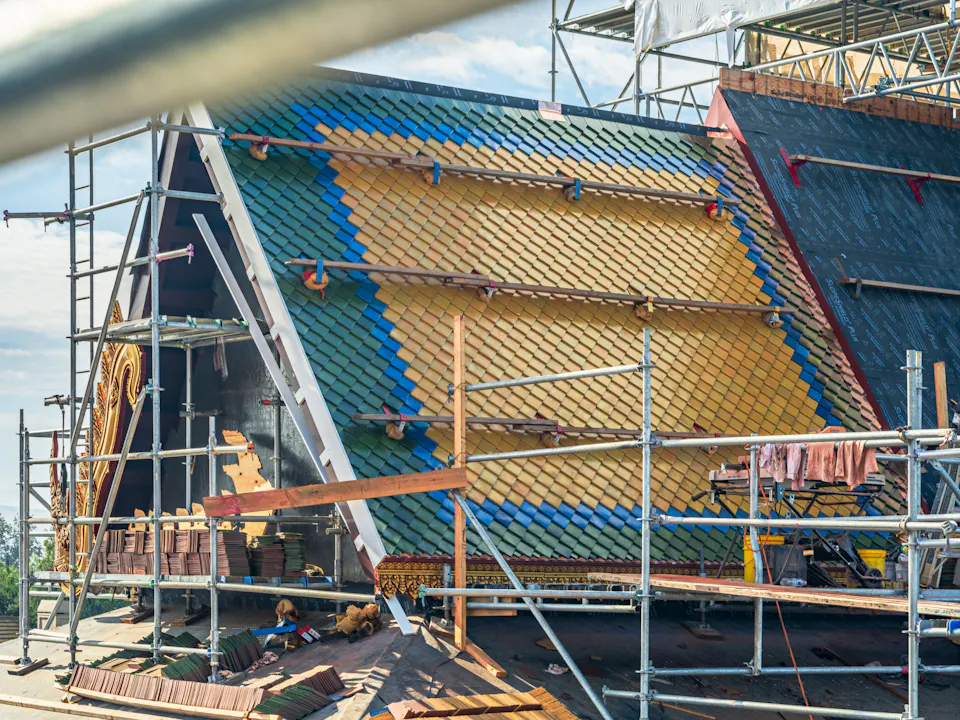
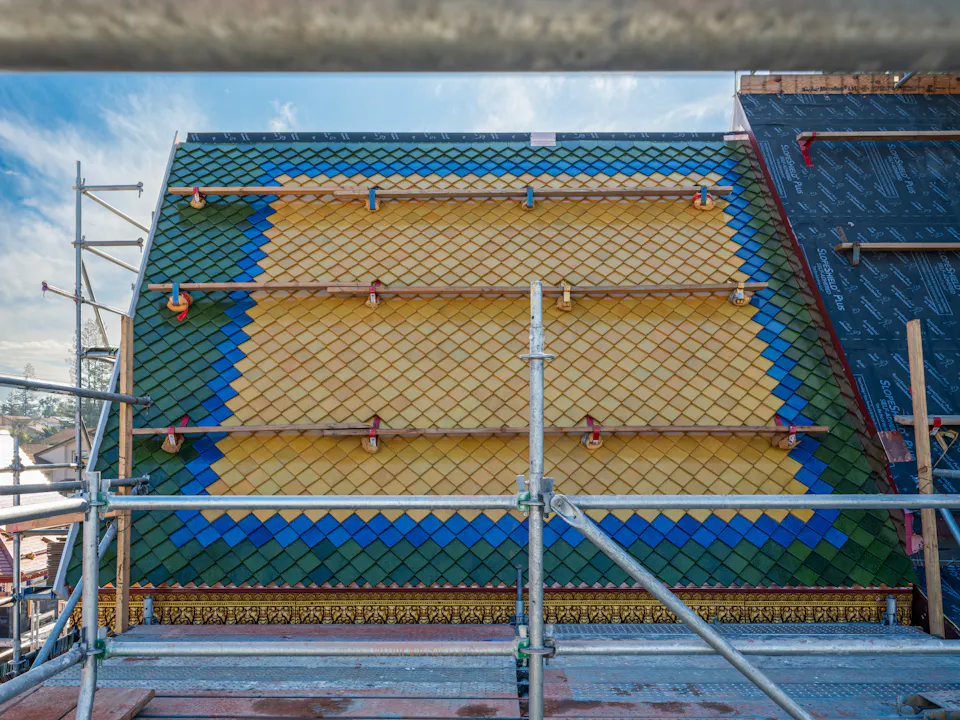
The patterned clay tile draws from Khmer precedents in both form and color. Its diamond layout references the scales of the naga, a mythical serpent-like being revered in Khmer tradition as a protector of the Dharma (teachings) and a guardian of sacred sites.
The color palette also carries meaning. Yellow is associated with enlightenment. Blue is tied to peace and guidance, while green is associated with unity and peacefulness. The pattern helps identify the building as a place of worship and sets it apart as a sacred landmark for the community.

Ground Taking Shape
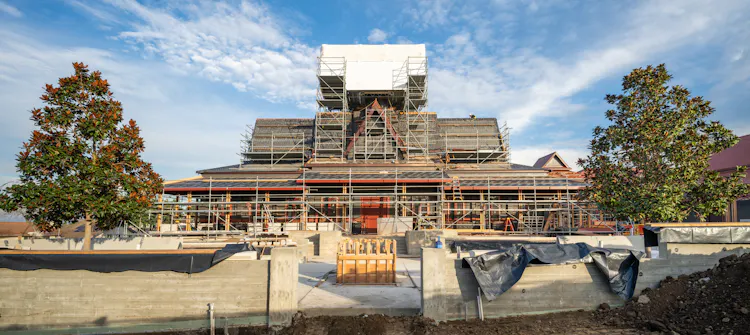
New magnolia trees have been planted as an early step in the landscape plan. Fragrant flowering trees have a long presence on Buddhist temple grounds, often tied to offerings and daily practice across Southeast Asia. Choosing magnolias here is a small detail that reflects the attention and care the project team brings to the work.
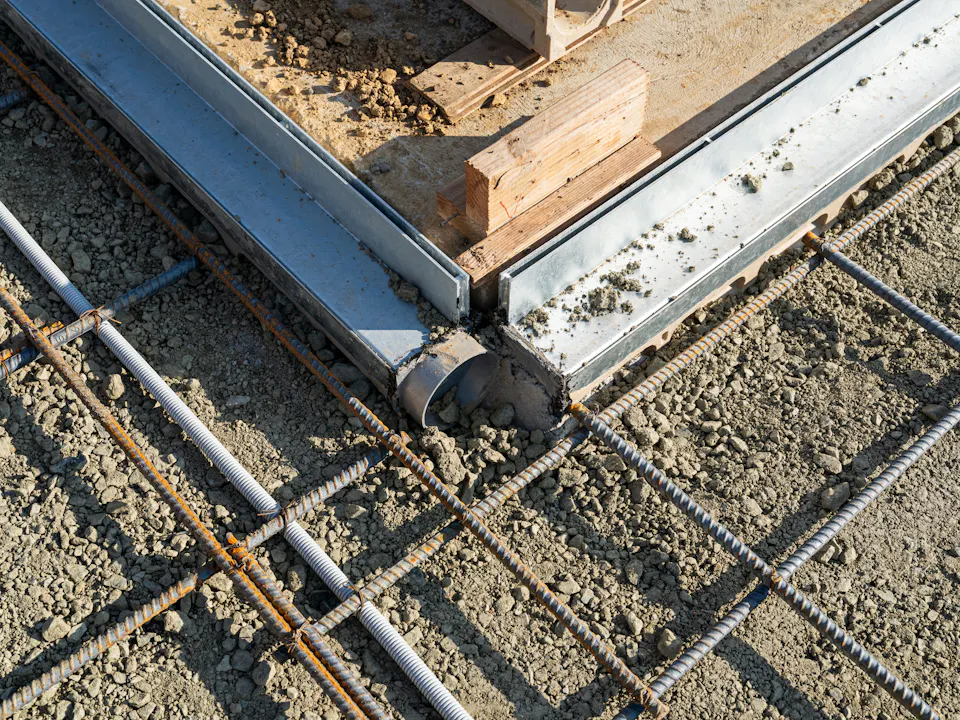
Concrete work is advancing through the meditation garden and surrounding circulation areas. These surfaces form the walkways, pads, and gathering areas that tie the campus together.
Linear drains run through key areas and slopes are carefully set so water moves where it should over time. Much of this work disappears once the surface is finished, yet it plays a major role in how the site performs year after year.
Closing In
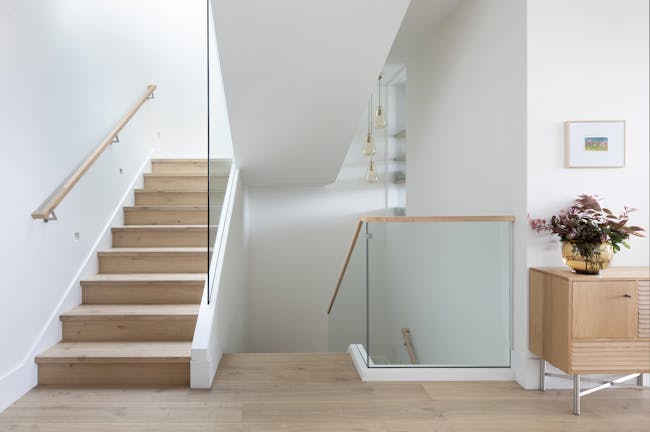
Insulation is in place, interior walls are taking shape, and crews are beginning to install finish materials. This phase requires close attention. Once wall materials are installed, any further adjustment to openings or building systems becomes harder to address.

Looking Ahead
The work on site is entering an exciting new phase. More surfaces and details will come into view in the months ahead. We invite you to continue following along as the project takes shape.