June 23, 2026
A Buddhist Temple Rises in the
Bay Area: Part IV
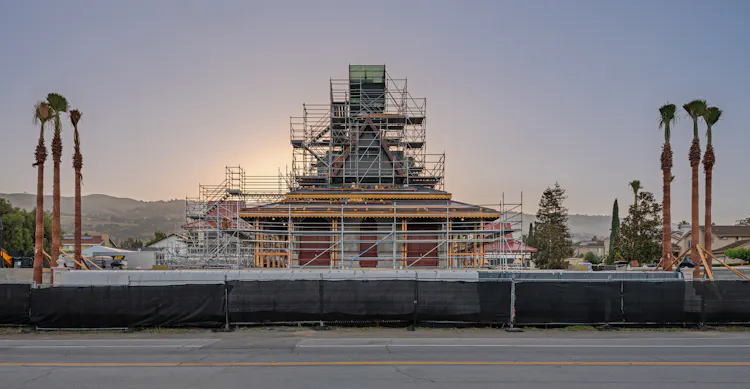
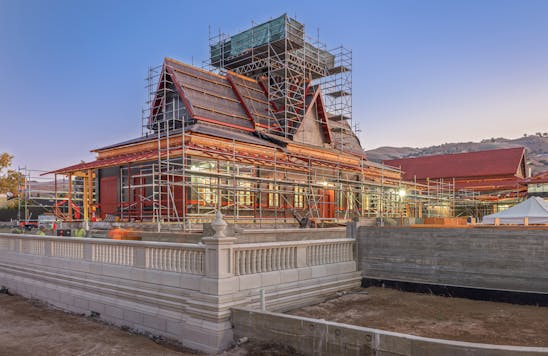
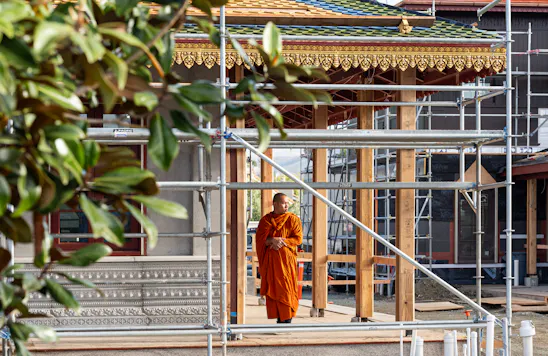
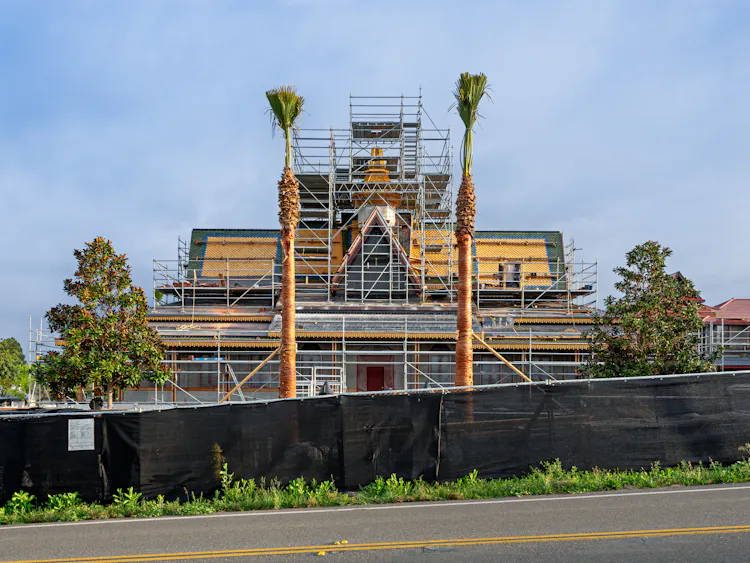
The project at Wat Khmer Kampuchea Krom continues to take shape. Ornamentation, exterior finishes, and interior details are becoming more visible and changing how the temple is seen and experienced.
Created in collaboration with A Khmer Buddhist Foundation, this fourth installment follows the fabrication and on-site work that gives the temple its ornamental character and form.
Sanctuary Ceiling
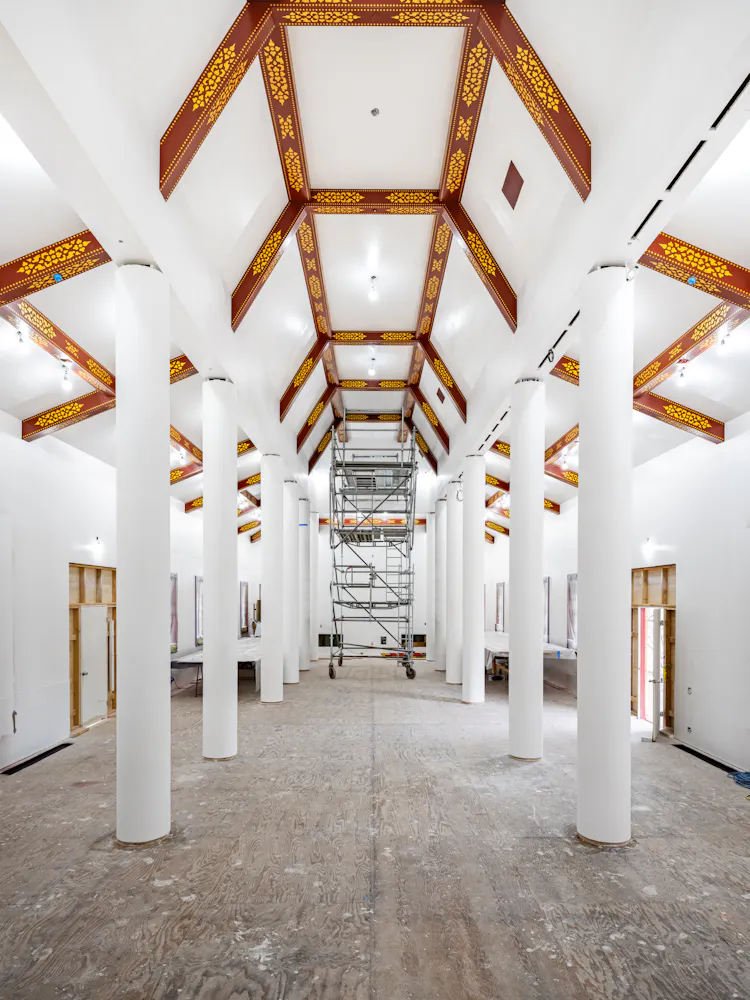
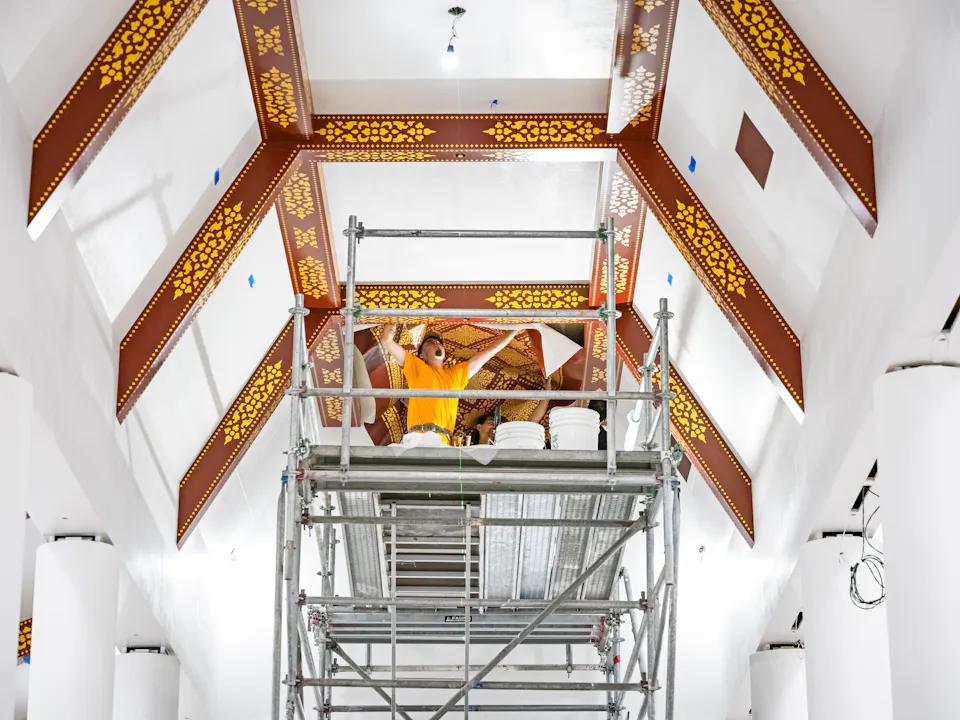
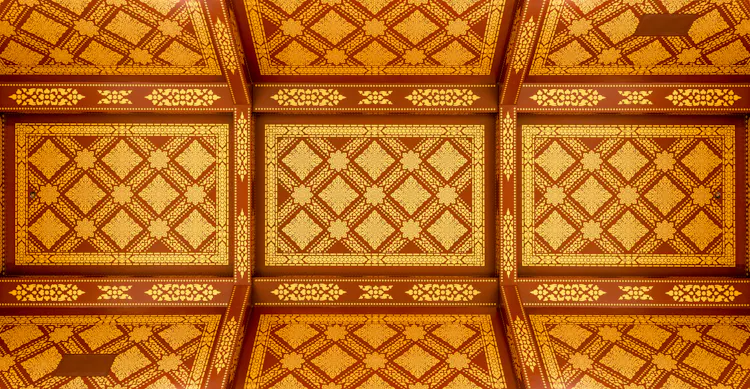
The strongest change inside the sanctuary is overhead. Painted beams, stenciled beam pockets, and patterned ceiling panels are now bringing warmth and pattern to the space.
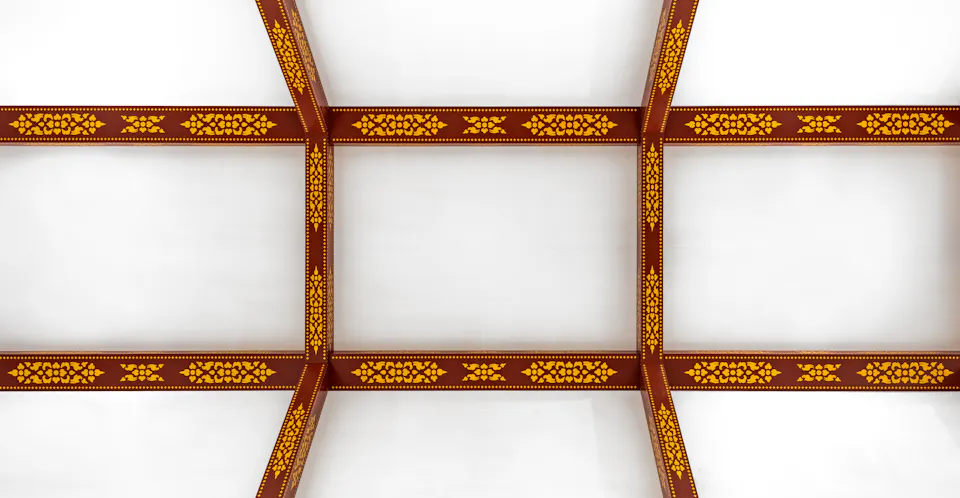
The ceiling panels are fabricated and painted off-site. The patterns were designed by the same artist in Cambodia responsible for the motifs throughout the temple. Each panel combines a vinyl base with a stenciled gold pattern applied by hand. The work is precise and developed through careful study.
The ceiling is where the interior begins to declare itself. The intricate pattern deliberately pulls the eye upward. It gives the room a sense of ceremony that will only deepen as the space fills in around it.
On-Site Ornament
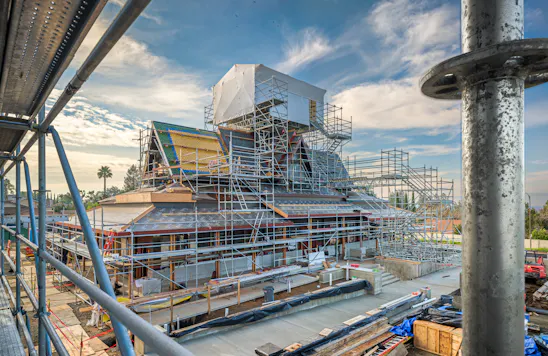
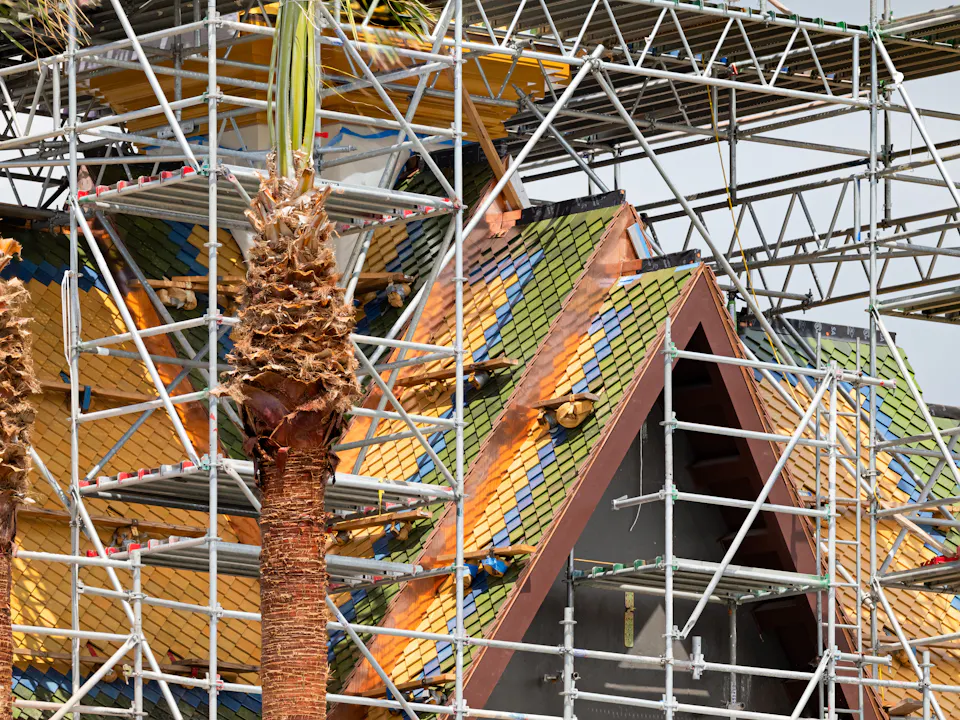
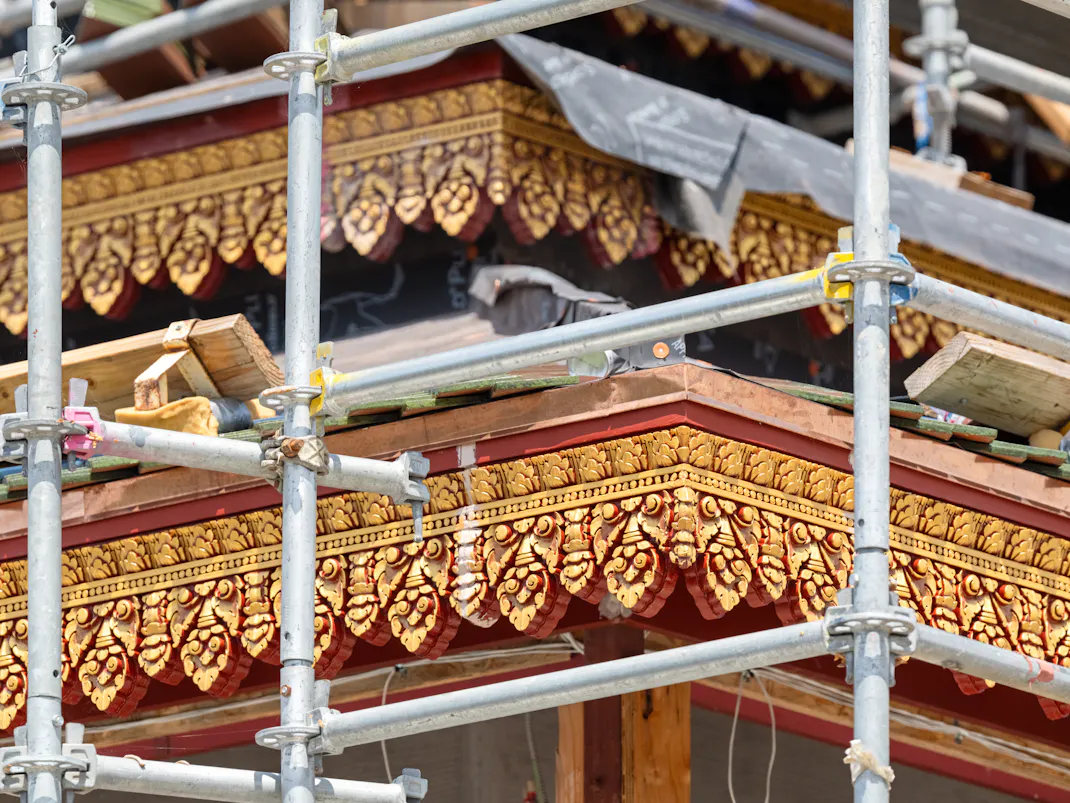
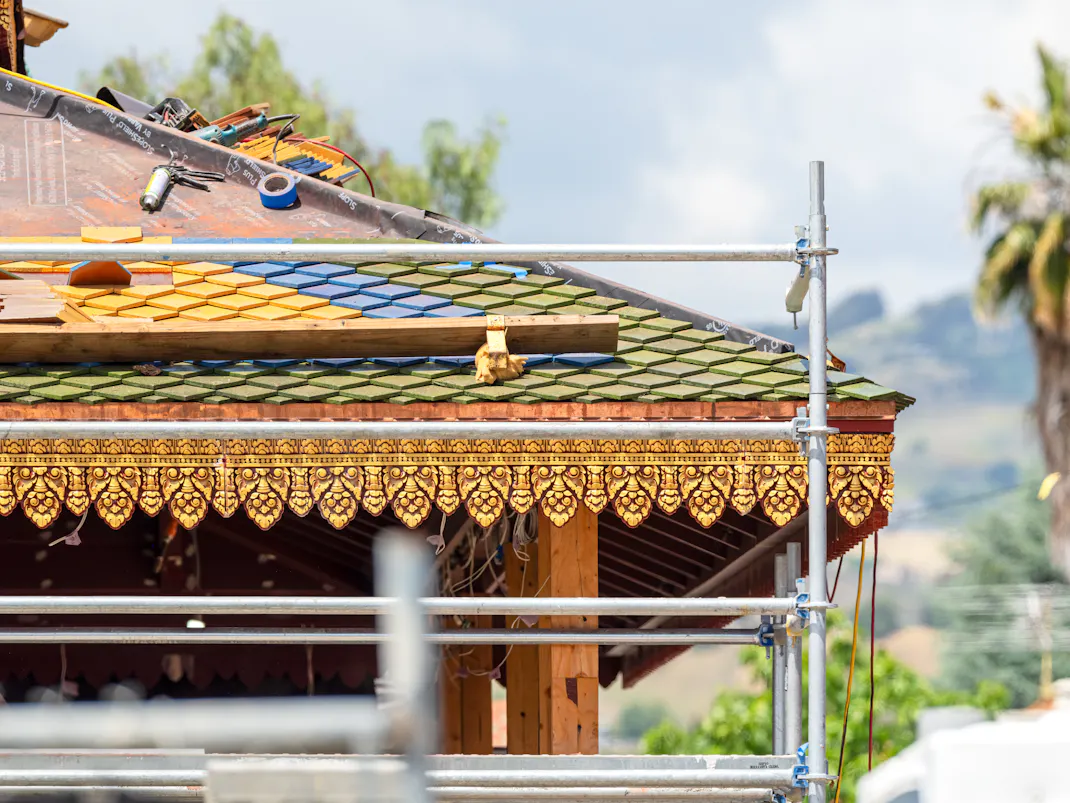
What began as individual roof components is now a continuous assembly. Patterned tile sets the main field of color, while copper, ornamentation, and raised details add depth along the eaves and gable ends. The parts read differently at full scale than they did as shop pieces. Details that felt separate in fabrication now resolve into a single surface.
Khmer temple tradition and the careful coordination of material, color, and proportion hold it together. Scaffolding still frames the work. That will soon change. When it comes down the shift will be significant. The roof is no longer a collection of parts. It is a single surface made of many.

Form & Meaning
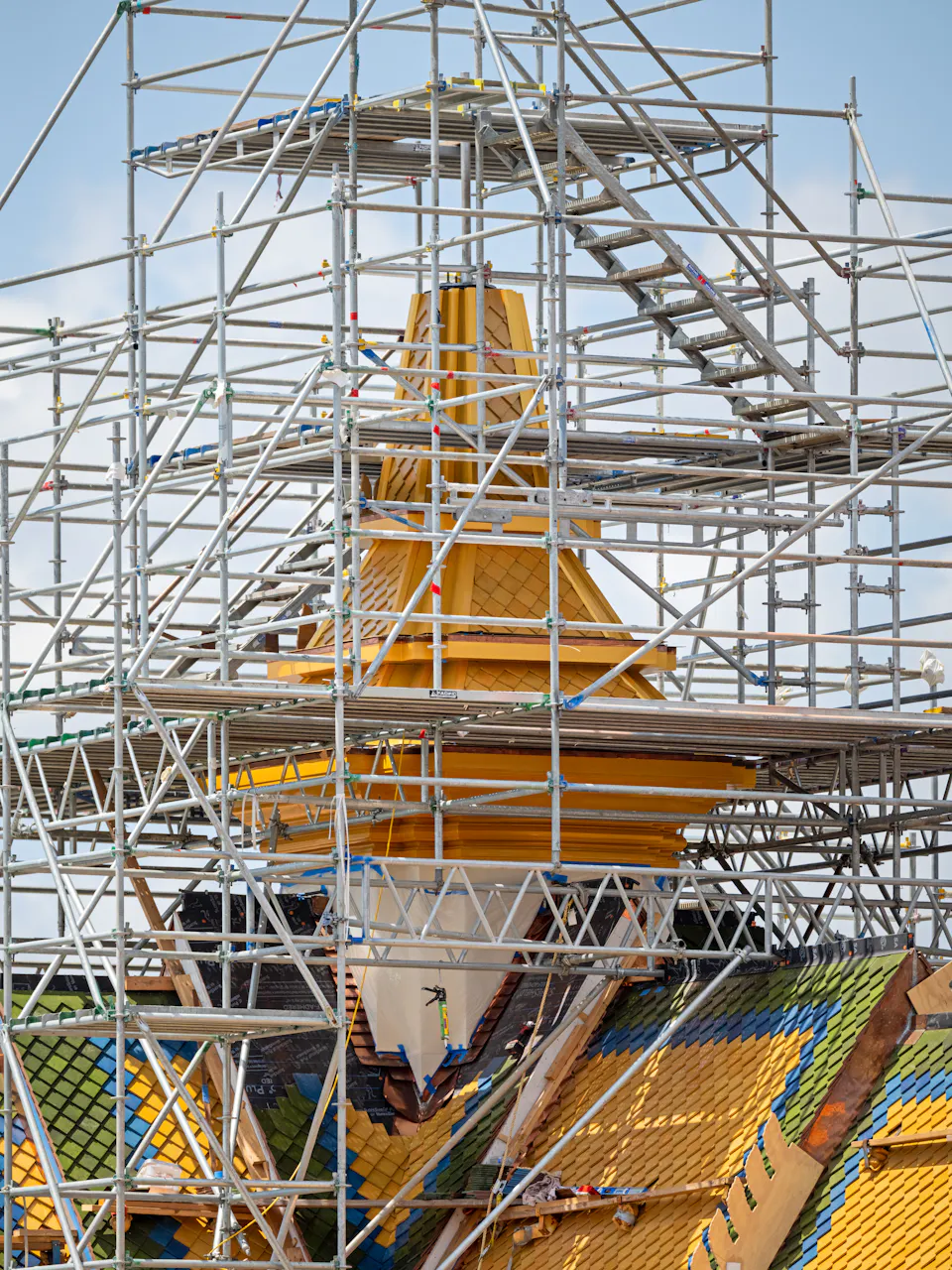
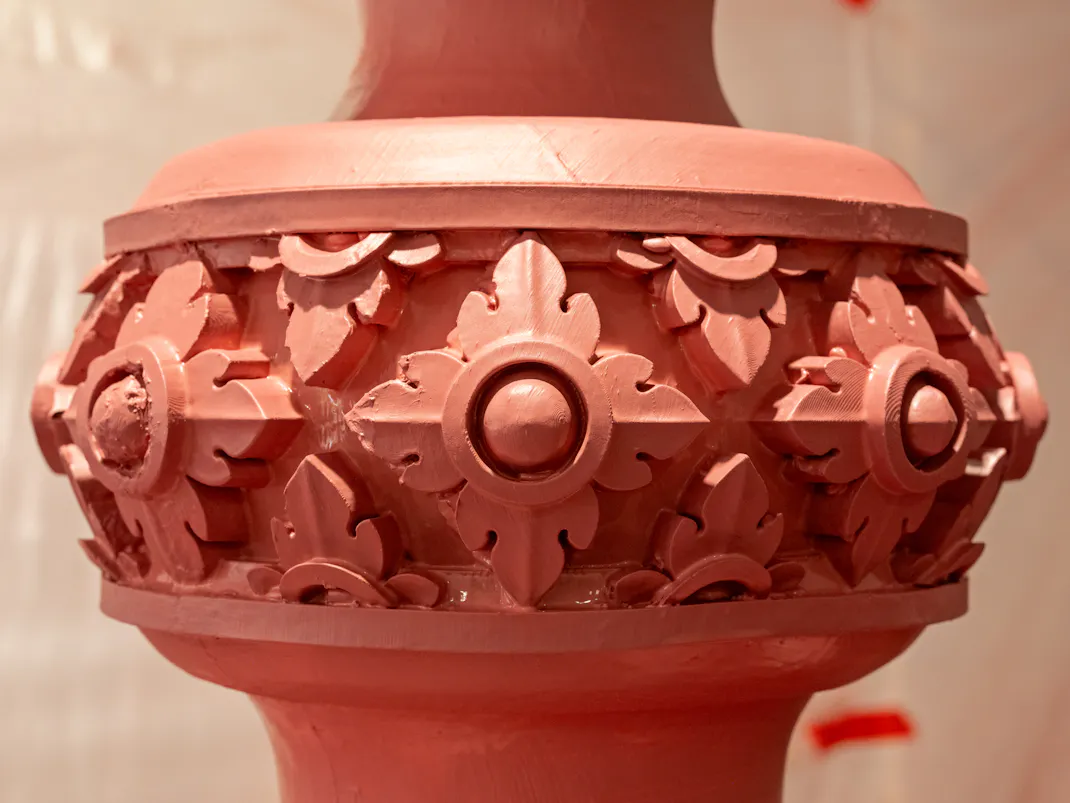
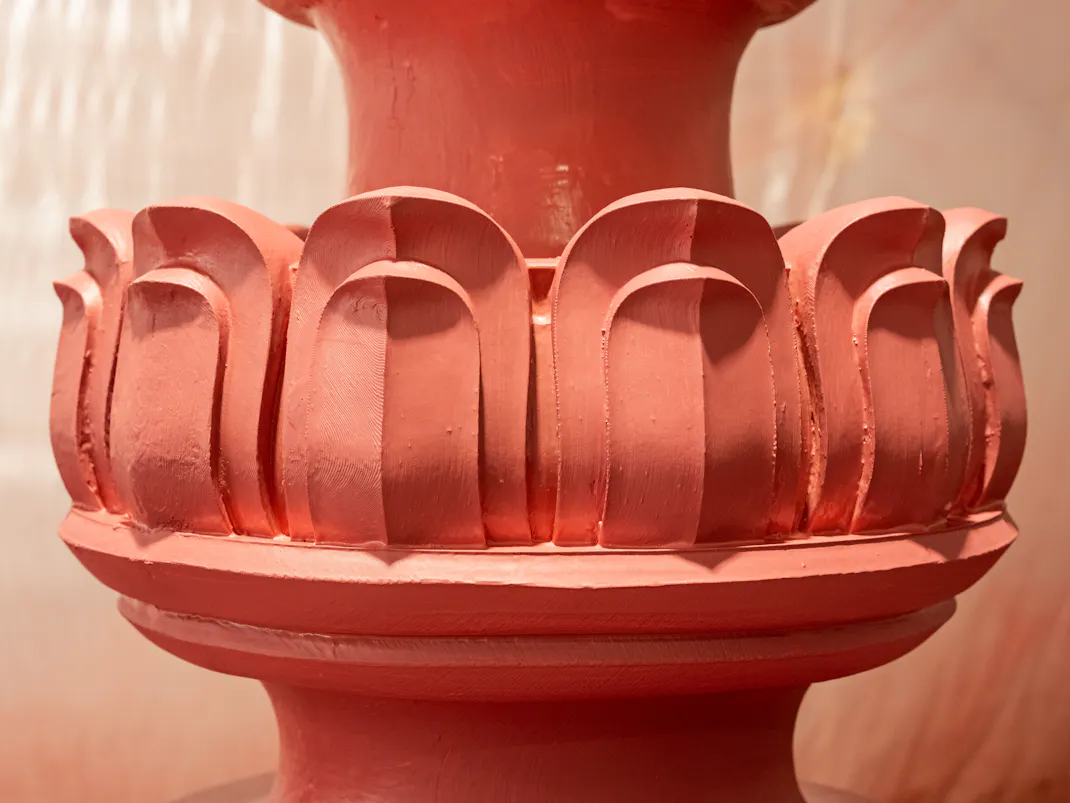
The spire is built in tiers. Each rises above the last and narrows toward a sharp point. Lotus petals frame each tier while bands of floral rosettes and circular medallions carry the ornamental language of Khmer tradition across every level.
The spire represents Mount Meru, the sacred center of the universe and home of the gods in Khmer Buddhist Beliefs. That ascending form marks the sanctuary as a place where the earthly and spiritual meet.
The lotus is a flowering plant that rises from muddy water to bloom above the surface. The spire's five tiers follow that same journey, which in Theravada Buddhism represents purity, awakening, and the potential for transformation in every person. Each tier gives that aspiration a physical form.
Craft & Fabrication
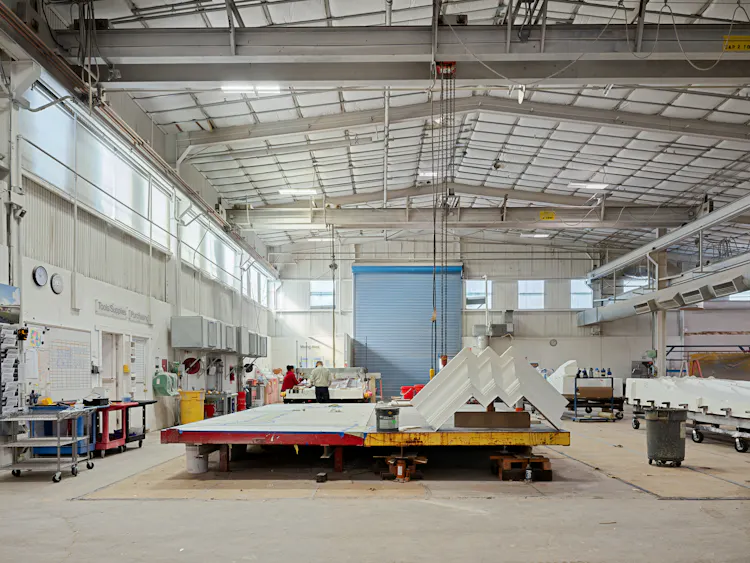
Much of what now sits on the building began miles away, at Kreysler & Associates. Working from traditional references, architectural models, and forms produced by craftspeople in Cambodia, their team translates decorative elements into composite architectural components, produced at scale and built to meet the requirements of construction in California.
Base of the Spire
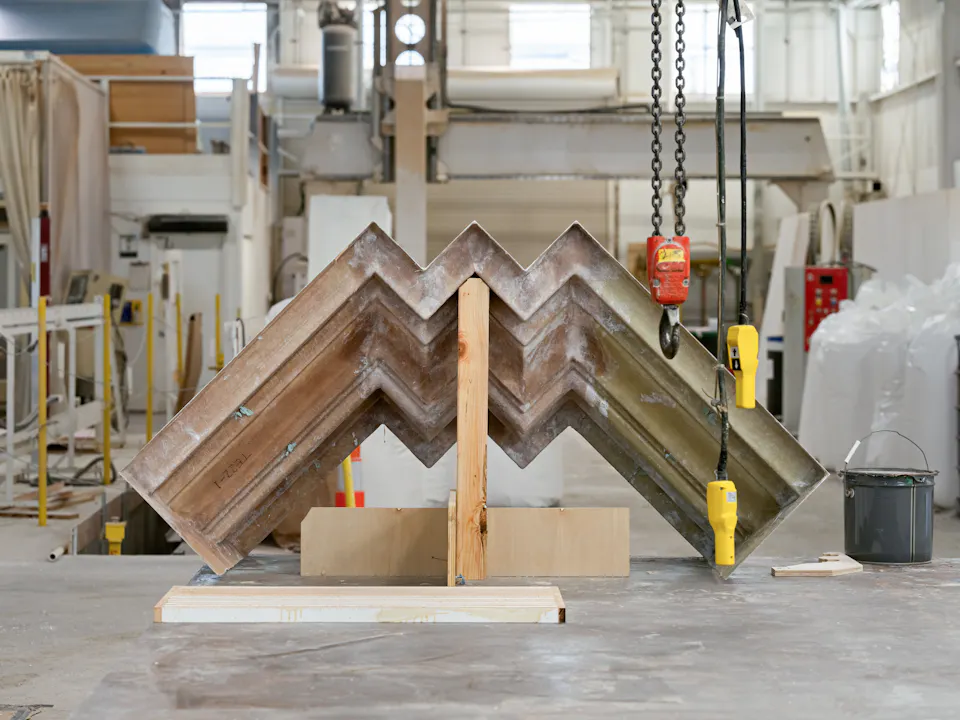
Kreysler begins with a large block of foam. It is cut by machine to create the form used to build a mold. This gives the team a precise starting point for a piece that will sit at one of the most visible points on the temple.
The mold is prepared with a resin-based coating. Layers of fiberglass are added to give the spire base its shape and strength. The material cures. The piece is removed from the mold and the surface is finished before installation atop the sanctuary roof.
Fascia Ornamentation
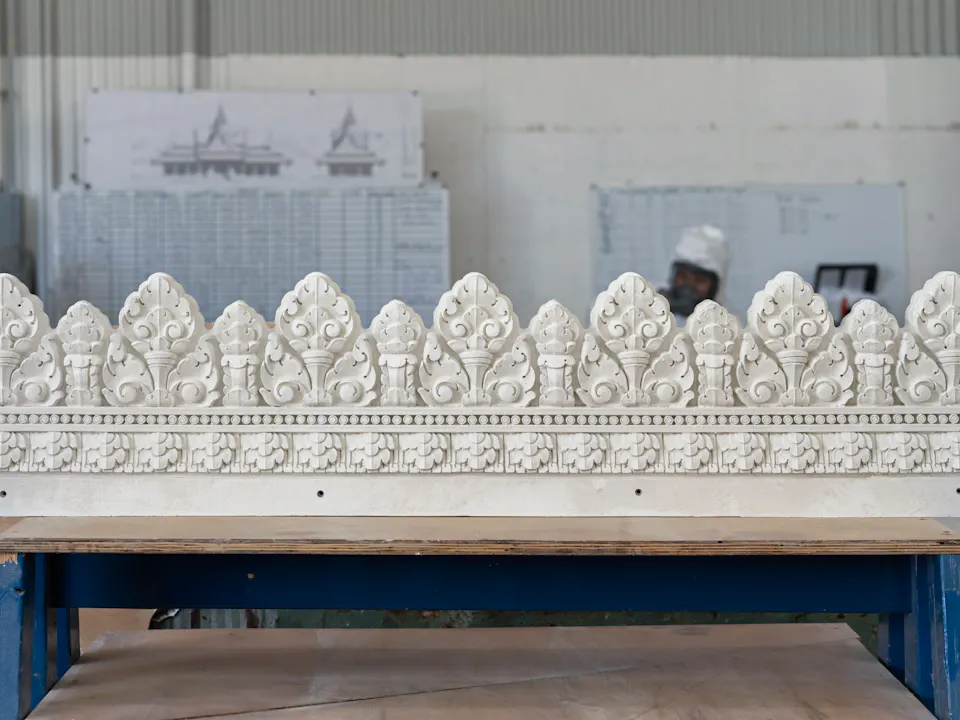
The fascia ornamentation follows a different path through Kreysler's shop. This work begins with silicone molds made by craftspeople in Cambodia. The pieces carry a kbach motif, part of the ornamental tradition that has long shaped Khmer religious architecture.
The process is similar to the spire base. A resin-based coating creates the finished surface. Layers of fiberglass give each piece its strength. The ornamentation will run along the eaves of the sanctuary roof. It adds pattern, depth, and rhythm to the exterior.
The Naga
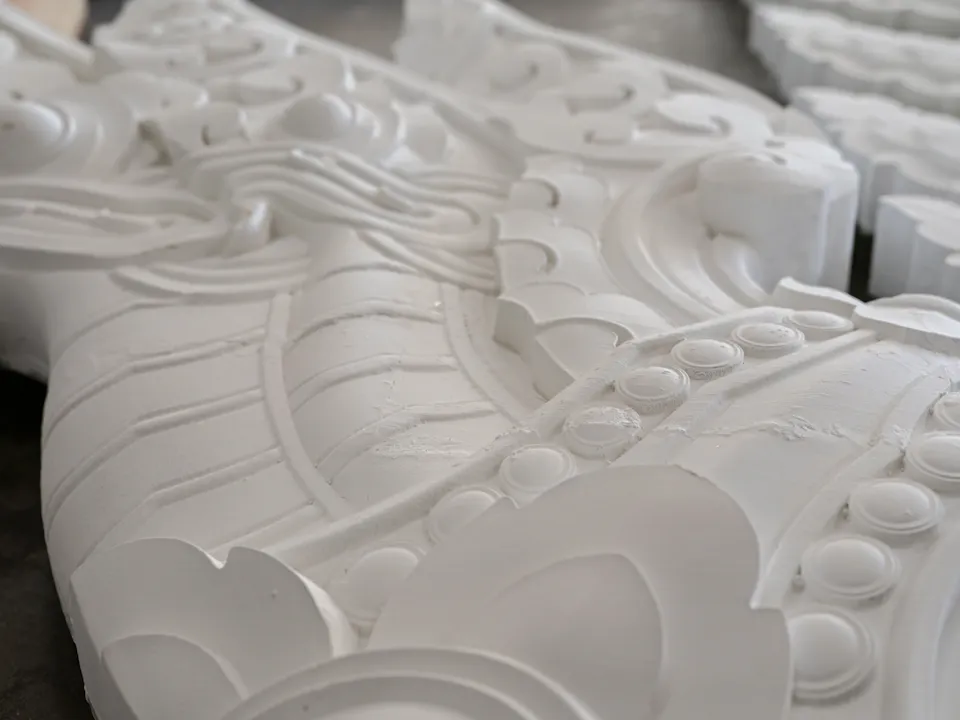
The Naga head is part of the bargeboard, the ornamental piece that follows the gable ends of the sanctuary roof. The roof tile references the scales of the naga. This piece gives the mythical serpent-like dharma protector a face and shape at the edge of the roof.
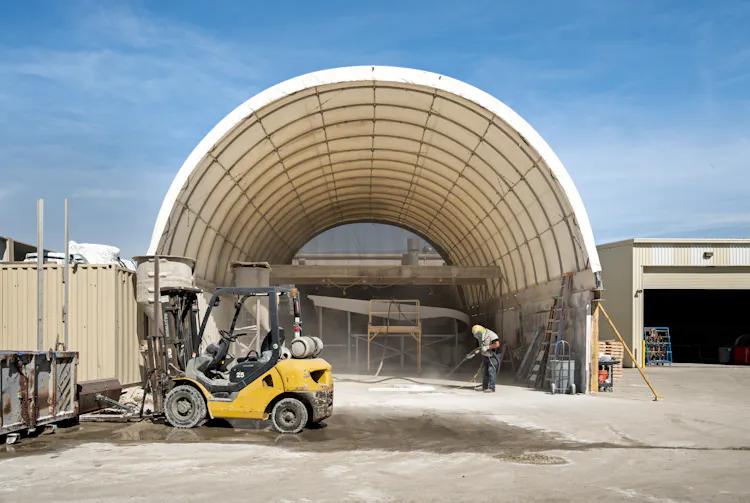
The piece is carried outside for soda blasting before paint. A coat of spray paint is applied first so the worker can see where the surface has been smoothed and where it still needs attention. Baking soda is used instead of sand because it is finer, allowing the surface to be refined without removing too much material. The finished piece is smooth, even, and ready for the site.
Wat Remains
The work of recent months has brought the project into clearer focus. The temple is being built not only through skill and dedication, but also care, generosity, and the collective effort of its community. That picture will deepen as the project moves through the remaining stages of work.